How to Build an Entire Activewear Capsule Wardrobe Almost Entirely From Dupes
Quick Answer: A genuinely functional activewear capsule built from dupes works best with 6-8 core pieces (2 leggings, 2 sports bras, 2-3 tops, 1 jacket) chosen from brands with strong reviews specifically for fabric quality and seam construction, spending slightly more on the pieces with the most wear frequency (leggings, bras) and saving the most on lower-stress pieces (tops, outerwear) where dupe quality gaps matter less.
The dupe conversation usually focuses on single-item comparisons — this leggings dupe versus that brand — without addressing the bigger question: how do you actually build a full, functional wardrobe this way without ending up with a closet of mismatched quality and colors that don’t work together?
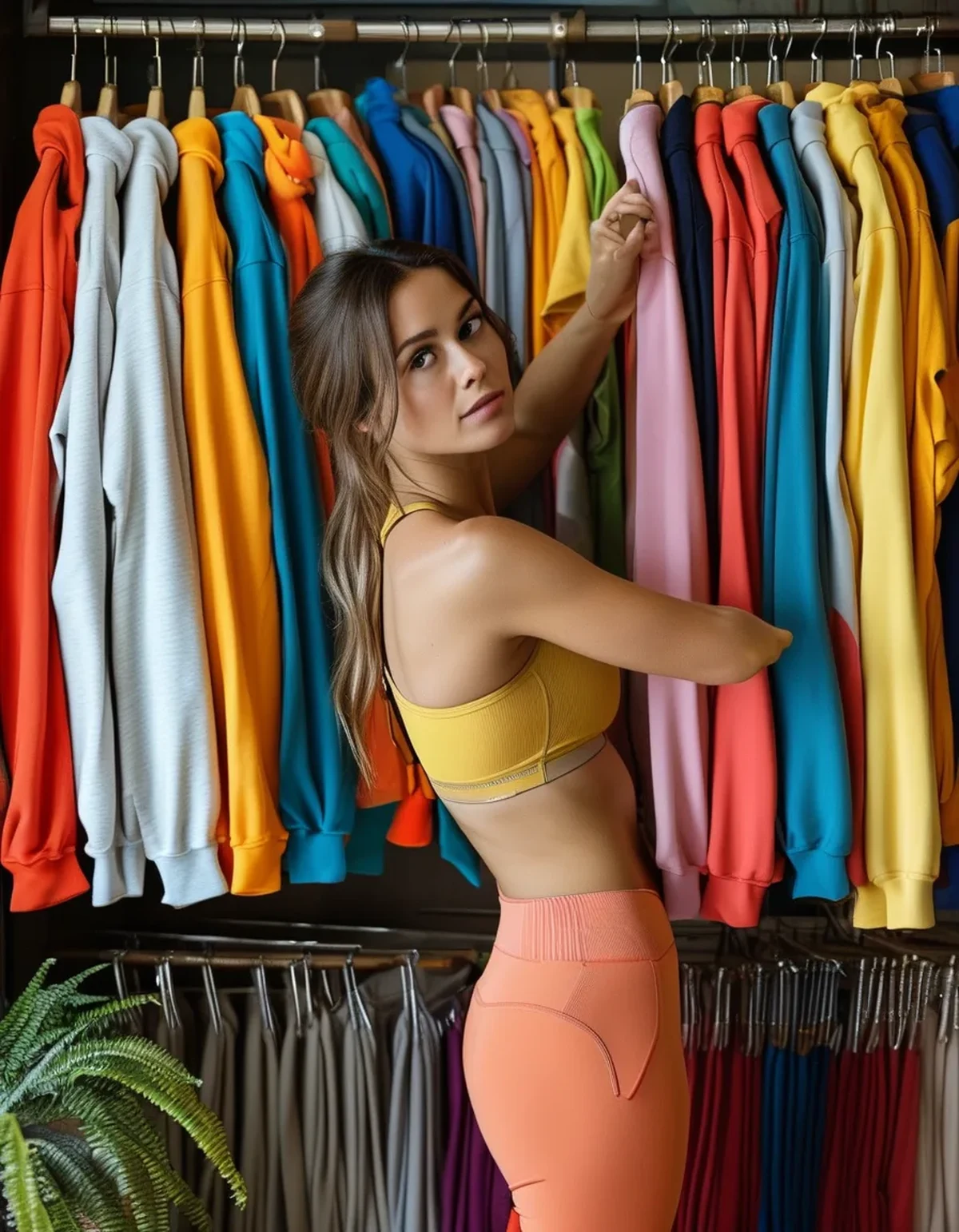
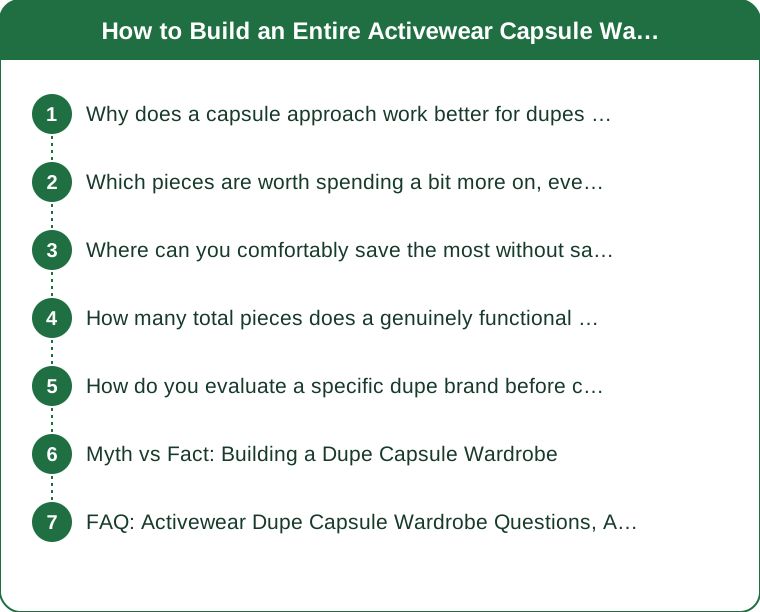
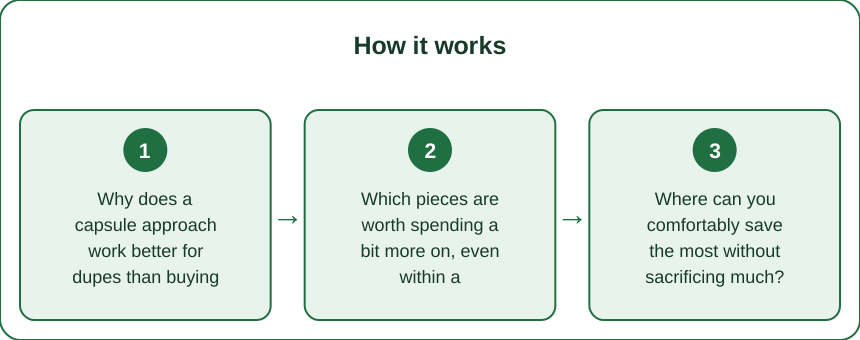
Why does a capsule approach work better for dupes than buying pieces randomly?
Random dupe shopping tends to accumulate items in inconsistent colors, cuts, and quality tiers that don’t mix and match well, creating a closet that looks larger than it functions. A deliberate capsule — chosen colors that coordinate, consistent sizing across a small number of trusted dupe brands — produces more actual outfit combinations from fewer total pieces, which is the whole point of a capsule wardrobe philosophy applied to any category, dupes included.
Starting with a neutral base (black, heather gray, one accent color) rather than a rainbow of individually appealing pieces means everything in the small collection can be worn with everything else, multiplying the practical value of each individual item well beyond what its price tag alone would suggest.
Which pieces are worth spending a bit more on, even within a dupe-focused wardrobe?
Leggings and sports bras see the most wear frequency and the most physical stress (stretching, washing, sweat exposure) of any activewear category, which makes fabric quality and construction differences show up fastest and most obviously in these two categories specifically. A slightly pricier, well-reviewed dupe legging that holds its compression and doesn’t pill after 20 washes is worth more than saving an extra few dollars on a version that degrades within a month and needs replacing anyway — the true cost per wear ends up higher on the cheaper option once replacement frequency is factored in.
Sports bras carry the added consideration of support quality, where fabric and construction shortcuts are both more noticeable and more consequential during actual workouts, making this a category where it’s worth reading fabric composition and reviews carefully rather than optimizing purely for lowest price.
Where can you comfortably save the most without sacrificing much?
Outerwear (jackets, pullovers) and casual athleisure tops tend to be worn under lower physical stress than leggings or bras — less stretching, less direct sweat contact, less frequent washing — which means quality gaps between a dupe and the name-brand original are less likely to become apparent or consequential over time. This is where the biggest dollar savings in a capsule wardrobe can happen with the least practical downside.
Similarly, single-purpose statement pieces (a specific print, an occasional-wear item) are lower-stakes places to experiment with a cheaper dupe, since infrequent wear means less cumulative wash-and-wear stress accumulating over the piece’s lifetime regardless of construction quality.
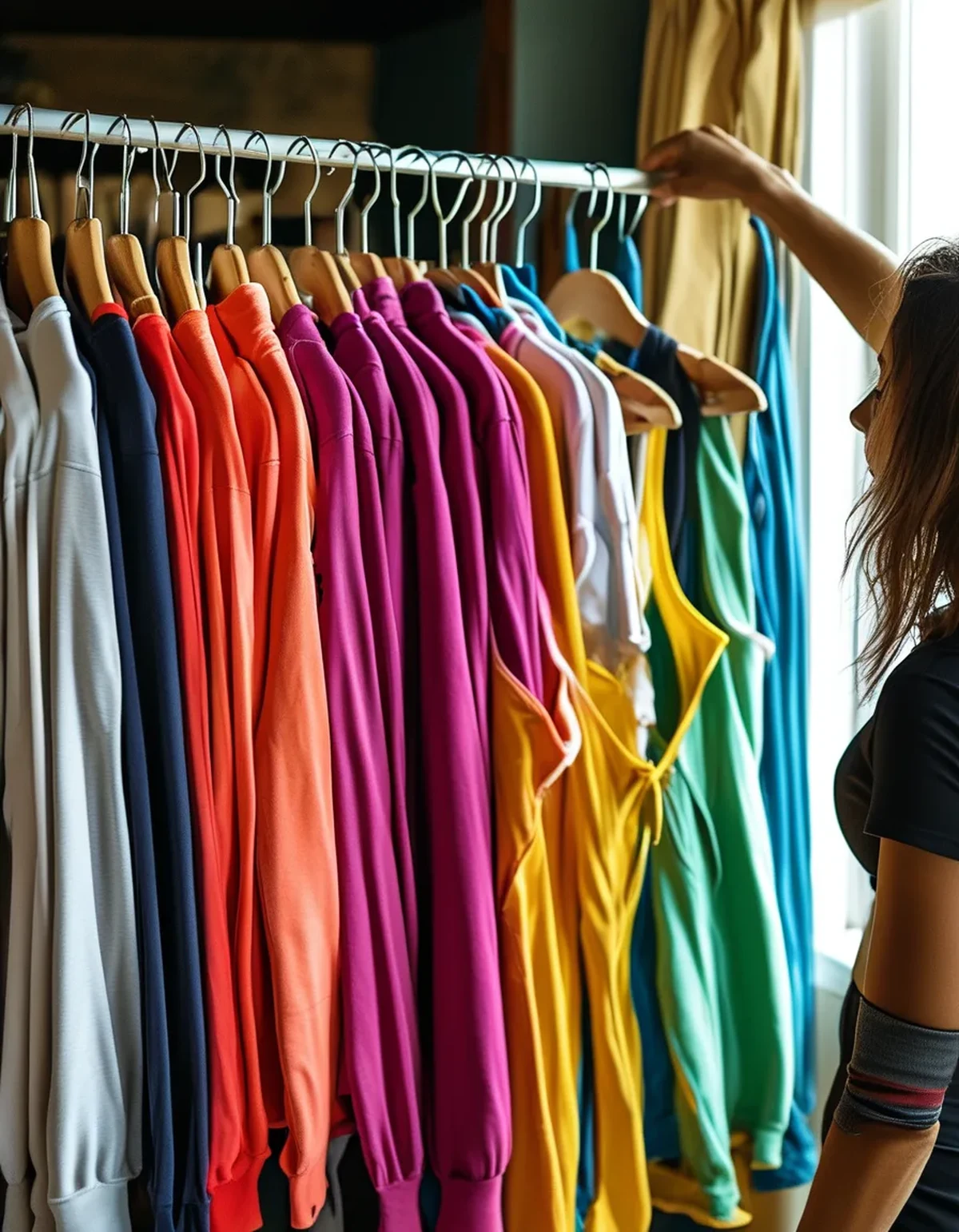
How many total pieces does a genuinely functional capsule actually need?
Six to eight core pieces — 2 pairs of leggings in different weights or purposes (a heavier compression pair, a lighter breathable pair), 2 sports bras of different support levels, 2-3 versatile tops, and 1 jacket or pullover — covers the large majority of workout and athleisure-wearing scenarios most people actually encounter in a given week, without the redundancy of a much larger, less coordinated collection.
Adding pieces beyond this core set makes more sense once the base capsule has proven itself functional through a few weeks of actual use, rather than trying to anticipate every possible need upfront and overbuying before knowing which pieces actually get reached for.
How do you evaluate a specific dupe brand before committing capsule-level spending to it?
Checking reviews specifically for wash durability (does it hold shape and color after 15-20 washes, not just how it looks new), fabric composition percentages, and return policy generosity gives a more reliable read on whether a brand is worth building a capsule around than photos or marketing copy alone, since these are the factors most predictive of whether a piece will actually last through a capsule wardrobe’s expected rotation.
Starting with a single trial piece from a new dupe brand before committing to multiple capsule pieces from it is a reasonable risk-management step, letting you evaluate real-world fabric and fit performance before scaling up the investment.
Myth vs Fact: Building a Dupe Capsule Wardrobe
Myth: A dupe capsule wardrobe means buying the cheapest option in every category. Fact: strategic spending — more on high-wear pieces like leggings and bras, less on lower-stress pieces — produces better overall value than uniformly minimizing price.
Myth: Mixing dupe brands together always looks mismatched. Fact: choosing a consistent neutral color palette across brands, rather than matching brand-to-brand, is what actually makes pieces coordinate.
Myth: A smaller capsule wardrobe is more limiting than a larger one. Fact: a well-coordinated small set of pieces that all mix and match typically produces more usable outfit combinations than a larger, less coordinated collection.
FAQ: Activewear Dupe Capsule Wardrobe Questions, Answered
How long should a well-chosen dupe capsule wardrobe realistically last?
With reasonable care (following wash instructions, rotating pieces rather than wearing the same item daily), a well-reviewed dupe capsule can reasonably last 1-2 years of regular use before pieces start needing replacement, similar to many mid-tier name-brand pieces.
Is it worth mixing name-brand pieces into an otherwise dupe-based capsule?
Yes, if budget allows — many people build a capsule with dupes for high-frequency categories and invest in name-brand for one or two specific pieces (a jacket, a favorite legging style) where a specific proprietary fabric technology matters more to them.
How do I know when it’s time to replace a piece in the capsule rather than keep wearing it?
Visible pilling, loss of compression or stretch recovery, fading, or seam fraying are all signals a piece has reached the end of its useful life, regardless of how the capsule was originally built.
TL;DR:
- A capsule approach (6-8 coordinated pieces) produces more usable outfits than random individual dupe purchases
- Spend slightly more on leggings and sports bras, which see the most wear stress and where quality gaps show fastest
- Save the most on outerwear and low-stress tops, where quality differences matter less over time
- Evaluate a new dupe brand with a single trial piece before committing to multiple capsule items from it
Start with the core 6-8 piece framework in one neutral palette before adding anything else — the coordination matters more than the total item count.
See It in Motion
Seen here: Super High Waist Embossed Yoga Leggings with Inner Pocket — shop it on bubblelime.com
Keep Reading
This article is for general informational and styling purposes only. Fit, sizing, and product availability may vary.